
Winter Comforts from Our Kitchen: How We Turn Autumn's Bounty into Winter Magic
There's something deeply satisfying about opening a jar of homemade chutney in January and tasting September's sunshine preserved in every spoonful. Here at The Old Forge, we don't just serve breakfast—we share the flavours of our year, bottled, pressed, and brought to your table with a story behind every bite.
As the days grow shorter and frost begins to kiss the Dorset hills each morning, I look back on autumn's preserving frenzy with satisfaction. The apples we gathered in September have been transformed into golden juice and warming cider. Our chickens—Chickalinda and her flock—keep us supplied with eggs that glow orange-gold on your breakfast plate. It's country living at its most delicious, and I'd love to tell you how it all comes together.
The Apple Harvest: From Orchard to Bottle
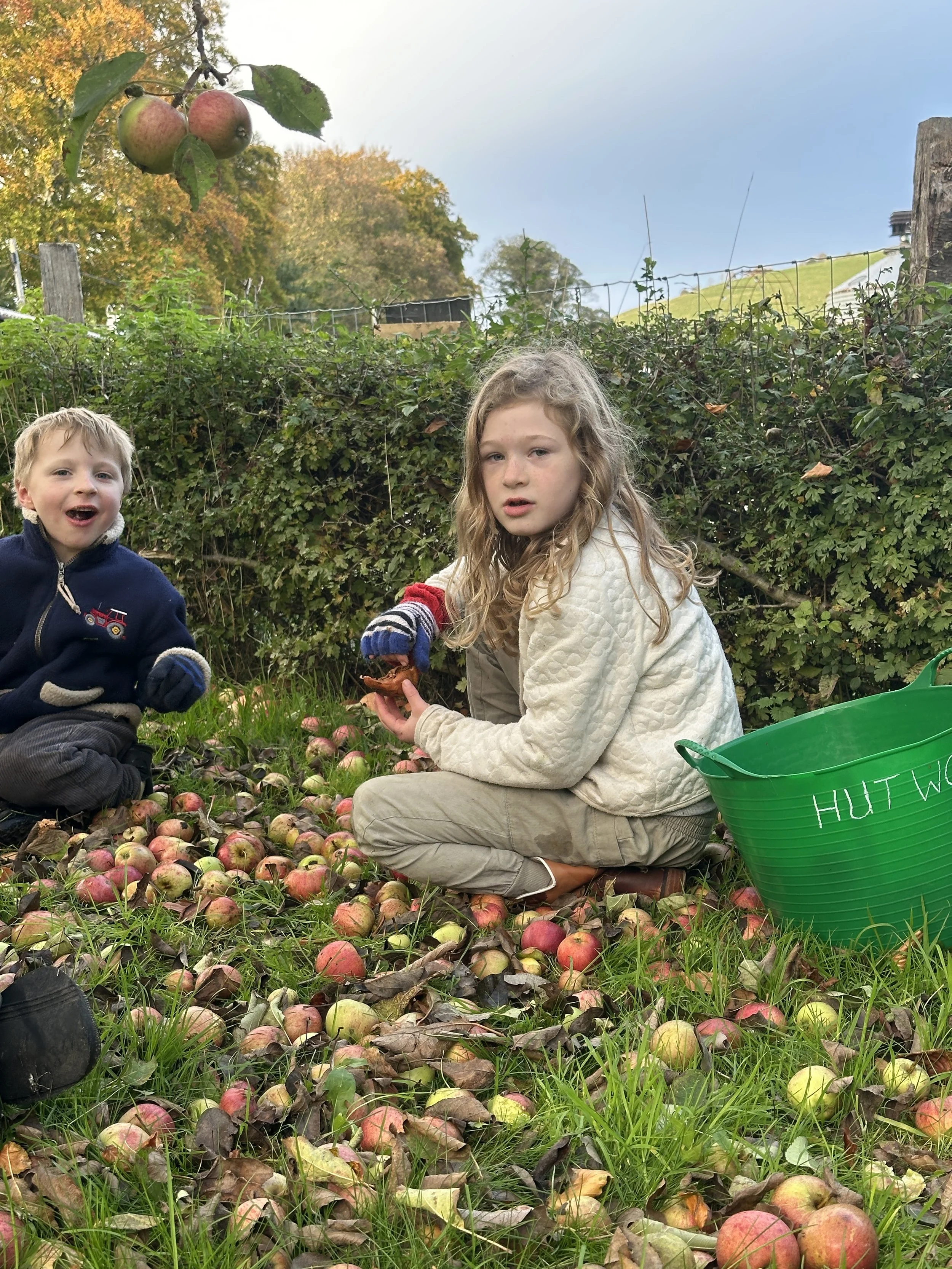
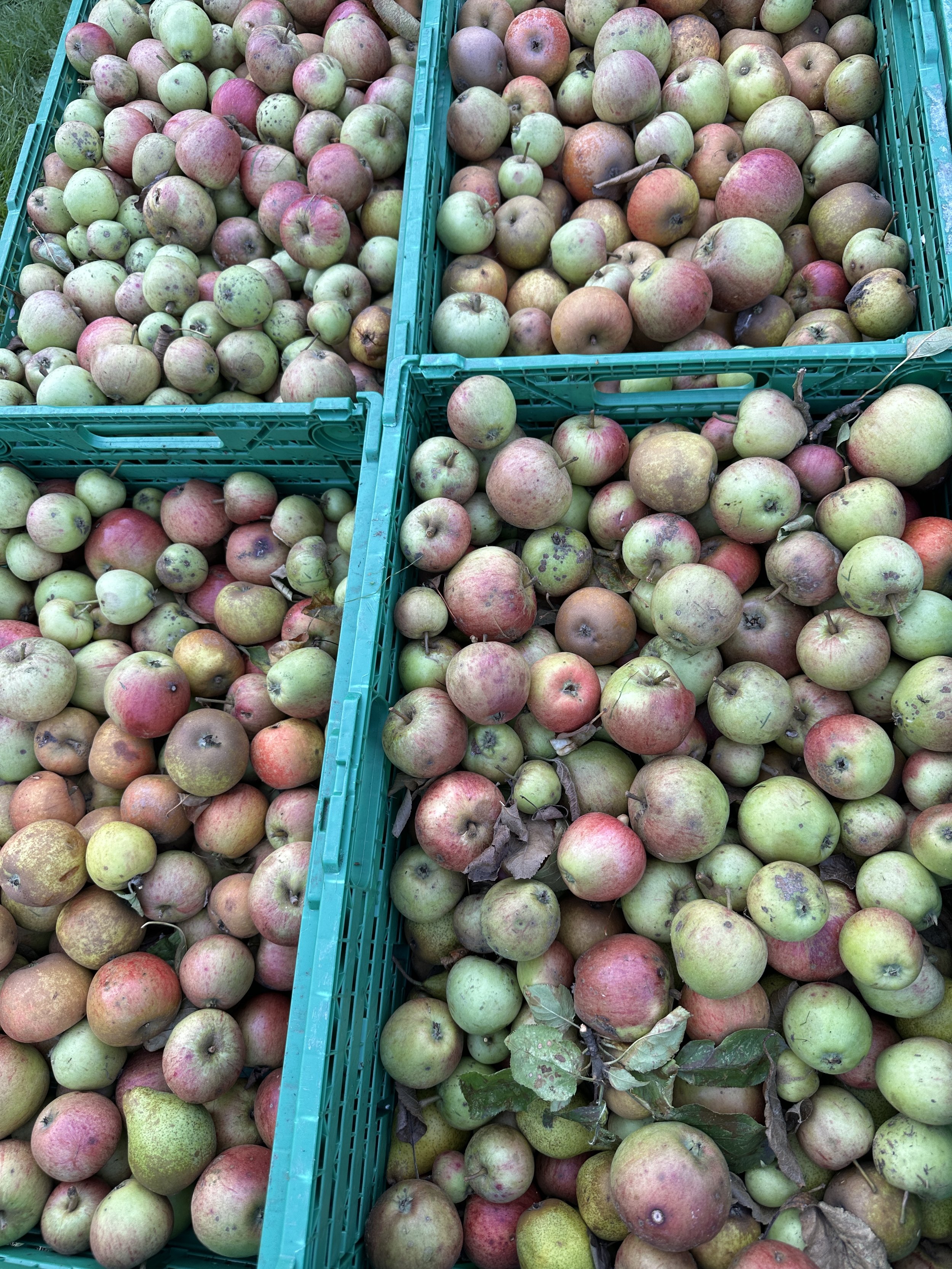
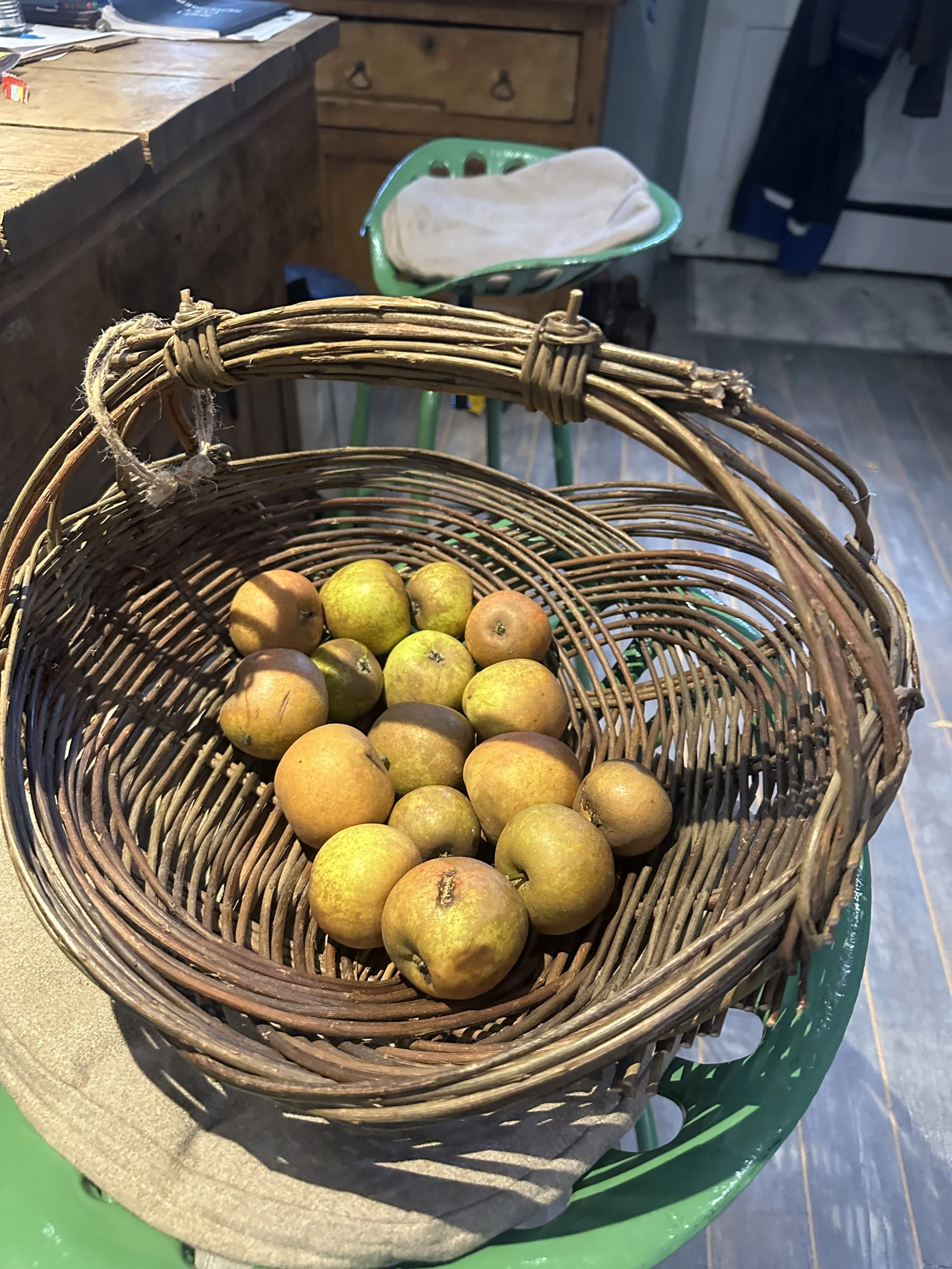
Every autumn, our small orchard trees groan with fruit. Not the uniform, waxed spheres you'd find in a supermarket, but proper apples—wonky, weather-marked, and bursting with flavour.
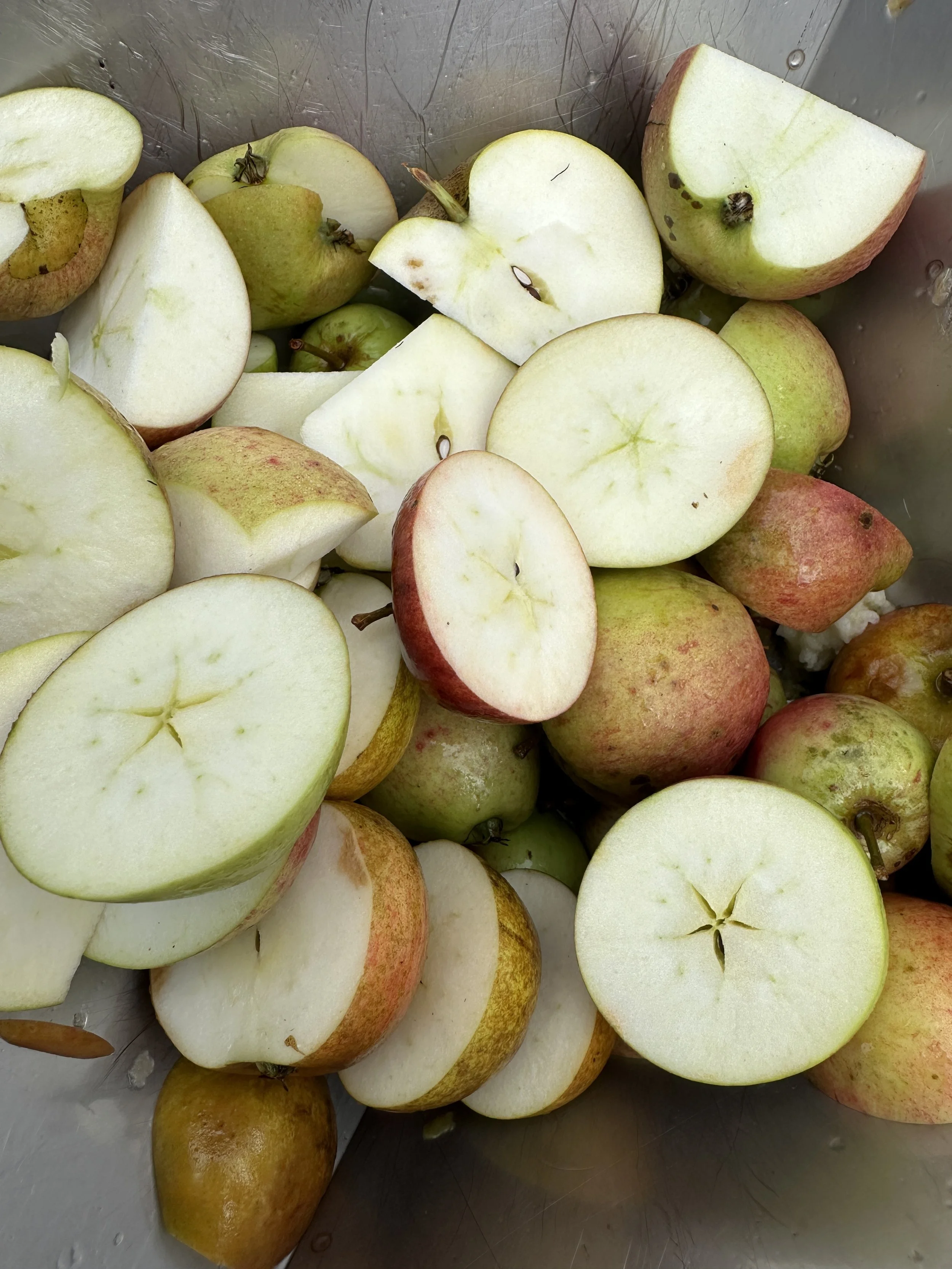
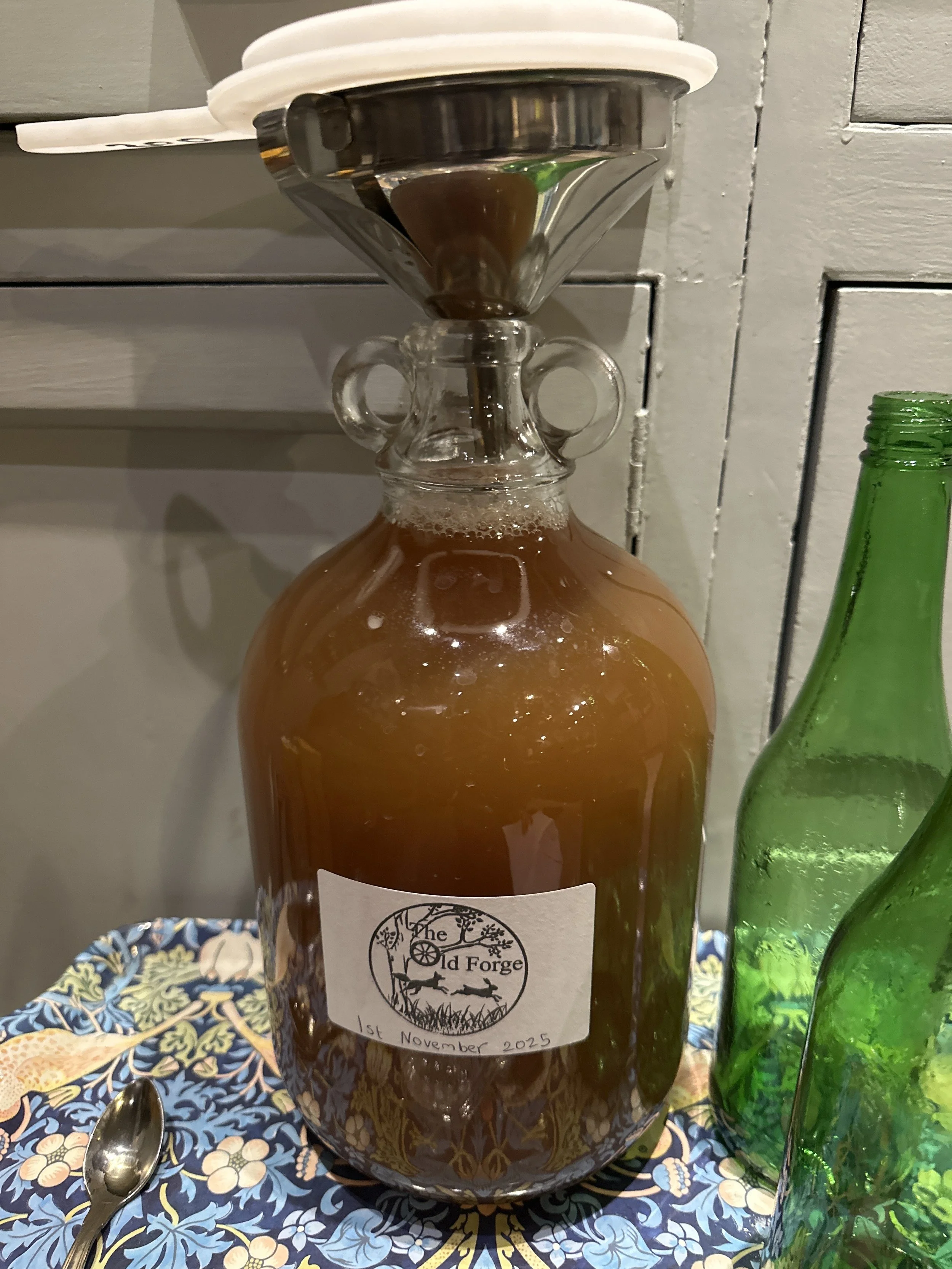
This year we pressed 80 bottles of apple juice and 15 litres of cider. The entire process happens in a single day: collect, sort, wash, press. We work as a team—there's no other way to get through the sheer volume of fruit before the day runs out.
Our traditional press is a thing of beauty. The scratter has been modified with a motor, so at the push of a button it grinds the fruit before it goes into the press. Then we manually turn the press to squeeze out every last drop of juice. Iris and Woody love this part—watching apples transform into golden liquid, helping turn the handle, and of course, tasting the results.
What we make from our orchard:
Fresh apple juice - Pressed and pasteurised to last the entire year. What you'll find on your breakfast table throughout winter, sweet and sharp and infinitely better than anything from a carton
Farmhouse cider - Left to ferment slowly for our own winter evenings by the fire
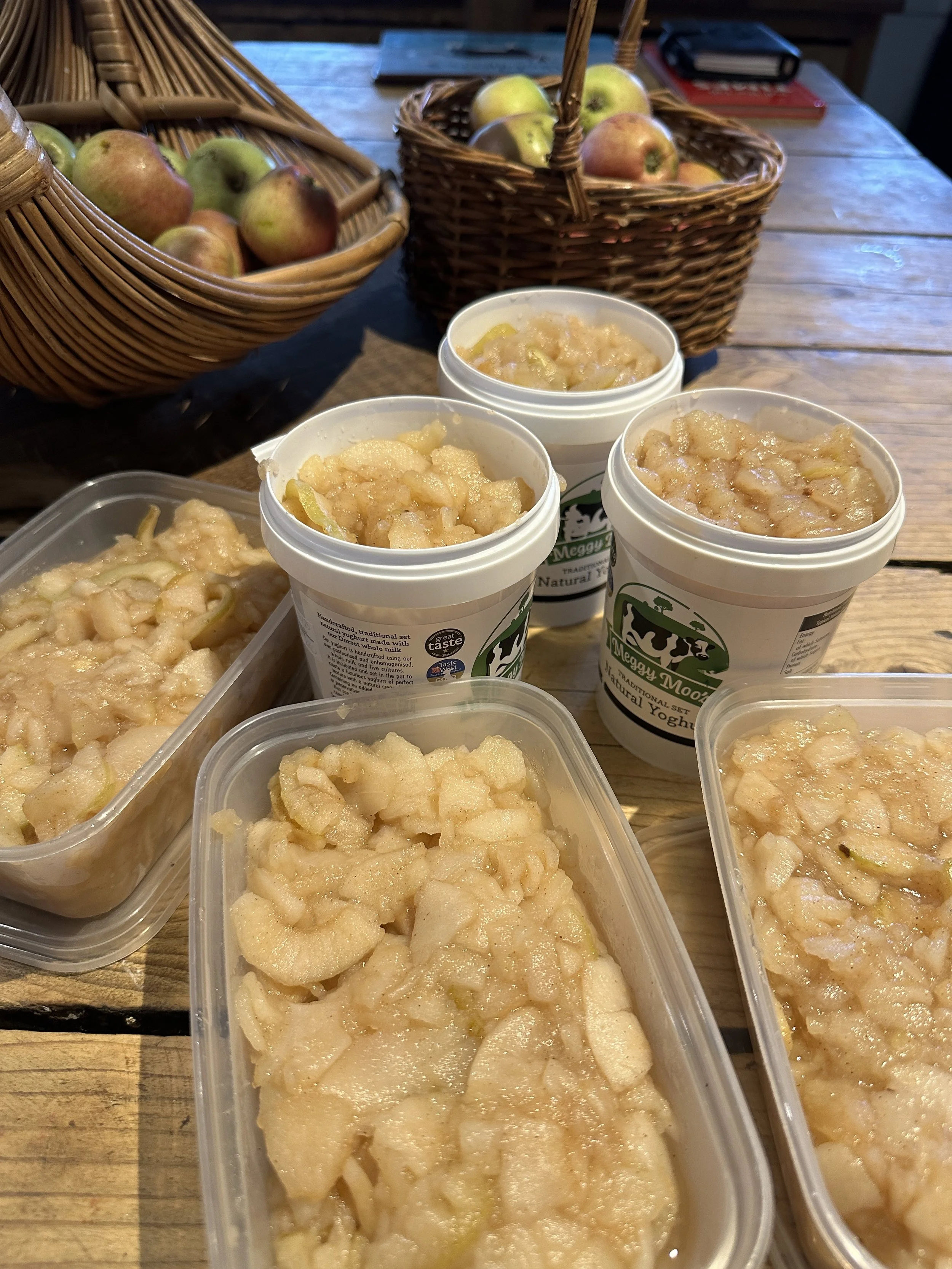
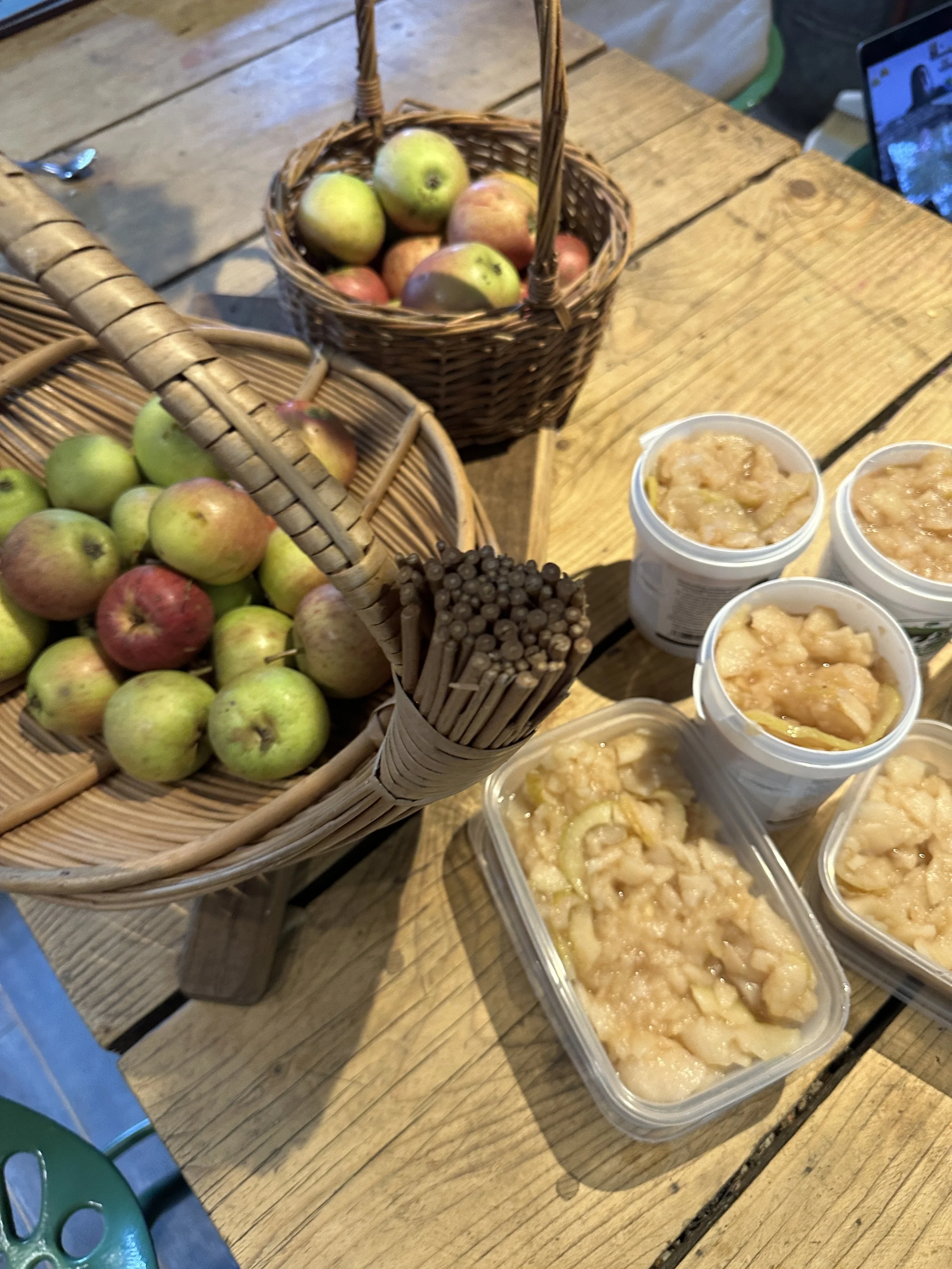
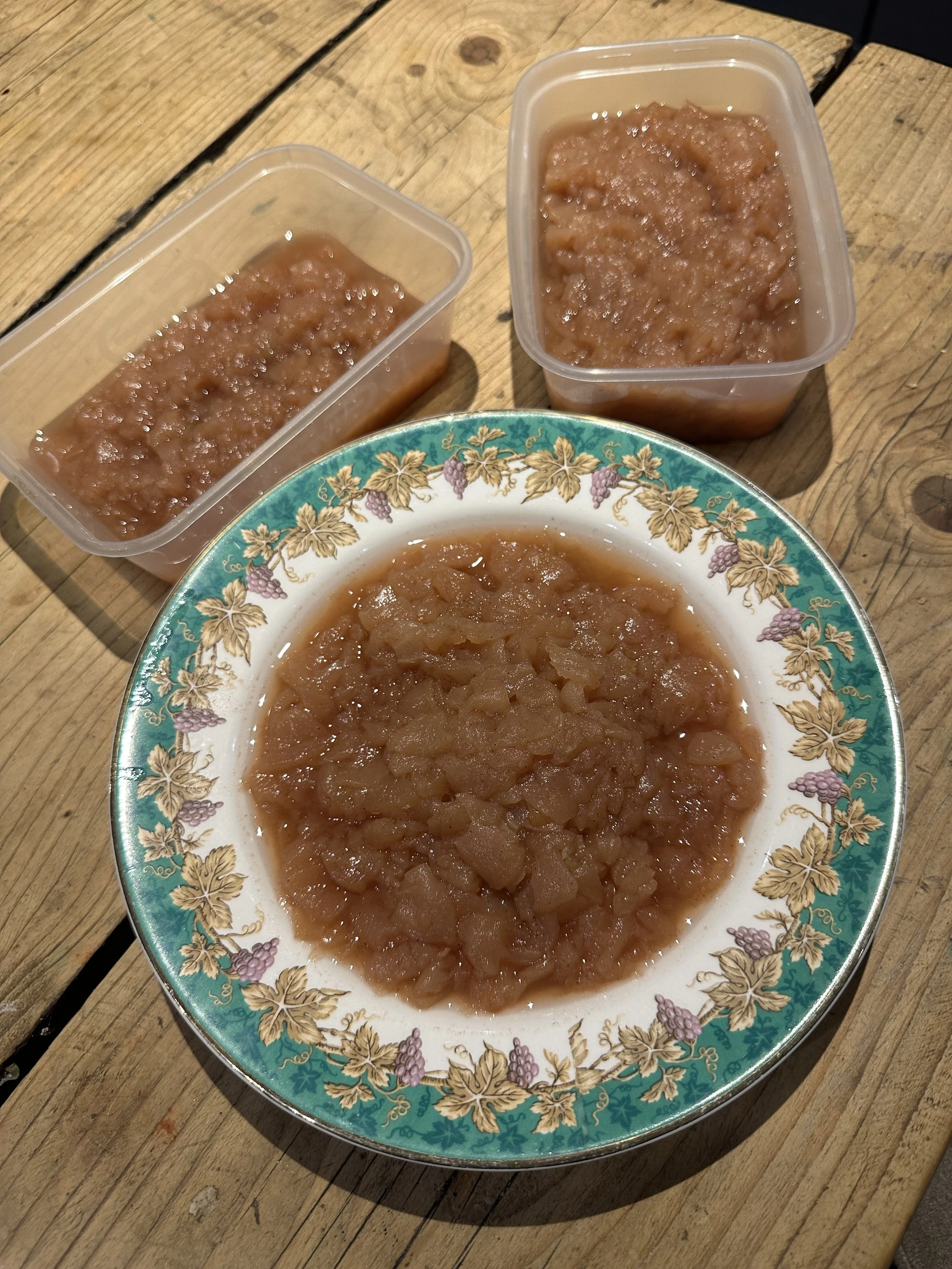
Apple compote - Made fresh then frozen in batches, served throughout the year until it's finished
The best food tells you where it came from. Our apple juice tells you it came from our own orchard, from chickens free-ranging in the fields alongside Lily the horse, Shortie the Shetland pony, and Theo.
Pressing Day Tips
Work as a team—it's the only way to get through it all
Collect, sort, wash and press all on the same day for the freshest flavour
Mix varieties for complexity—cookers add sharpness, eaters bring sweetness
Share the pulp with the animals and our friend in the village who has pigs
Pasteurise properly if you want it to last the full year
The satisfaction of seeing 80 bottles lined up, sealed, and ready to see us through to next autumn is enormous. We only have a small orchard, so once it's gone, it's gone. That makes every bottle precious.
Lucy's Chutney: A Recipe That Needs No Improving
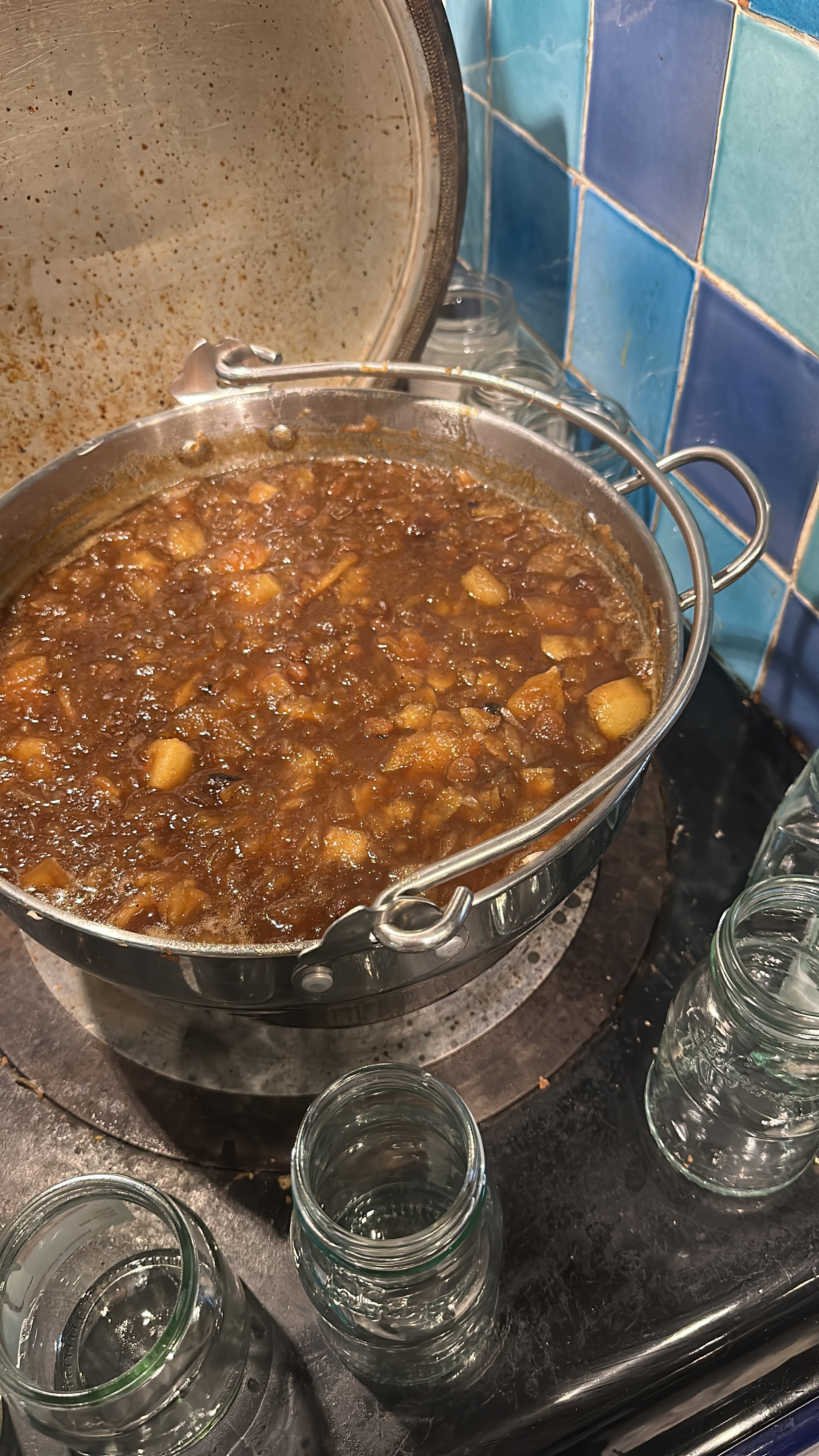
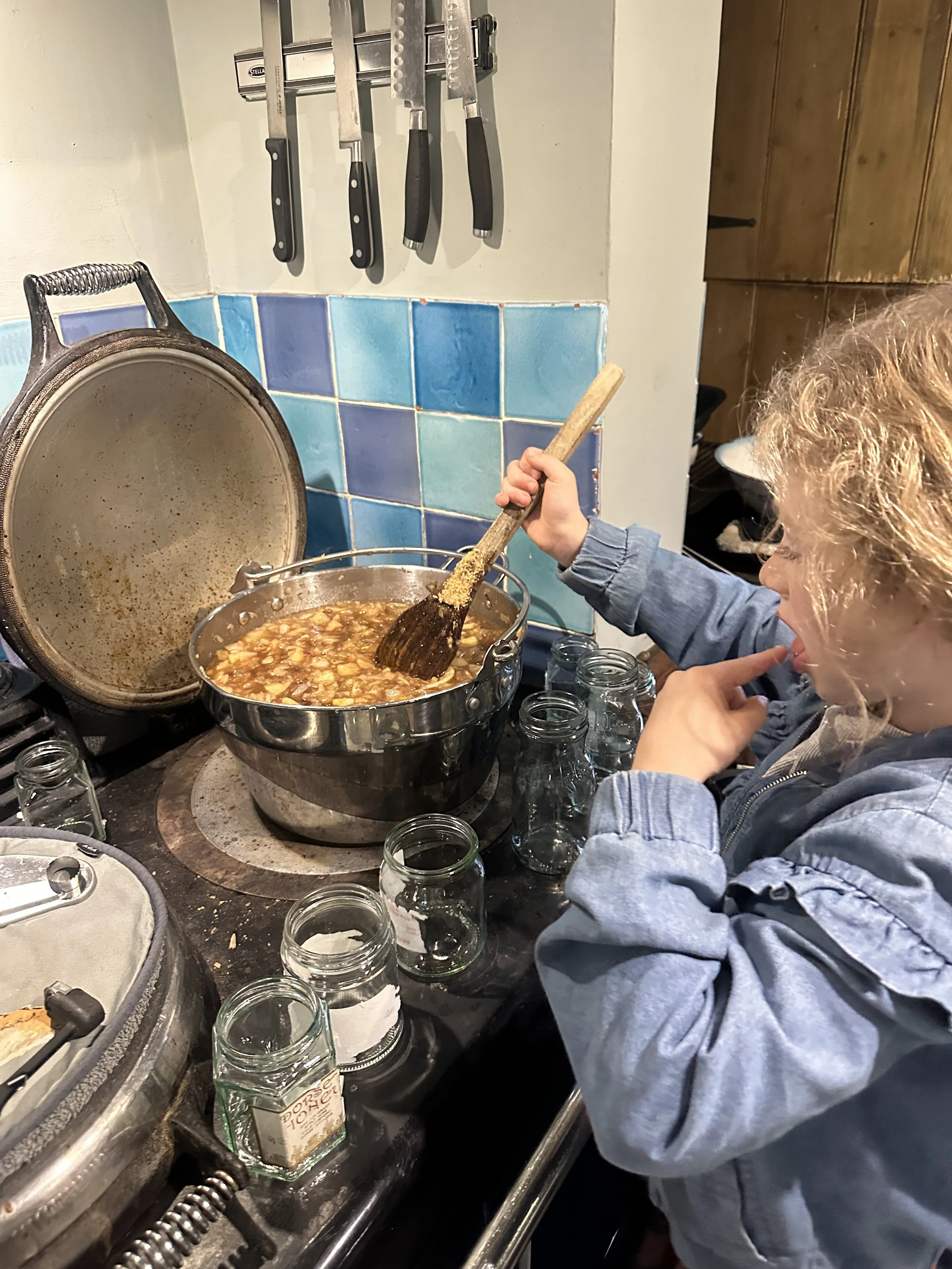
This chutney recipe came from my mum, Lucy, and it's never needed changing. Some recipes arrive perfect and should simply be honoured, made carefully, and passed on. Iris and Woody help me make it now, and one day they'll make it themselves.
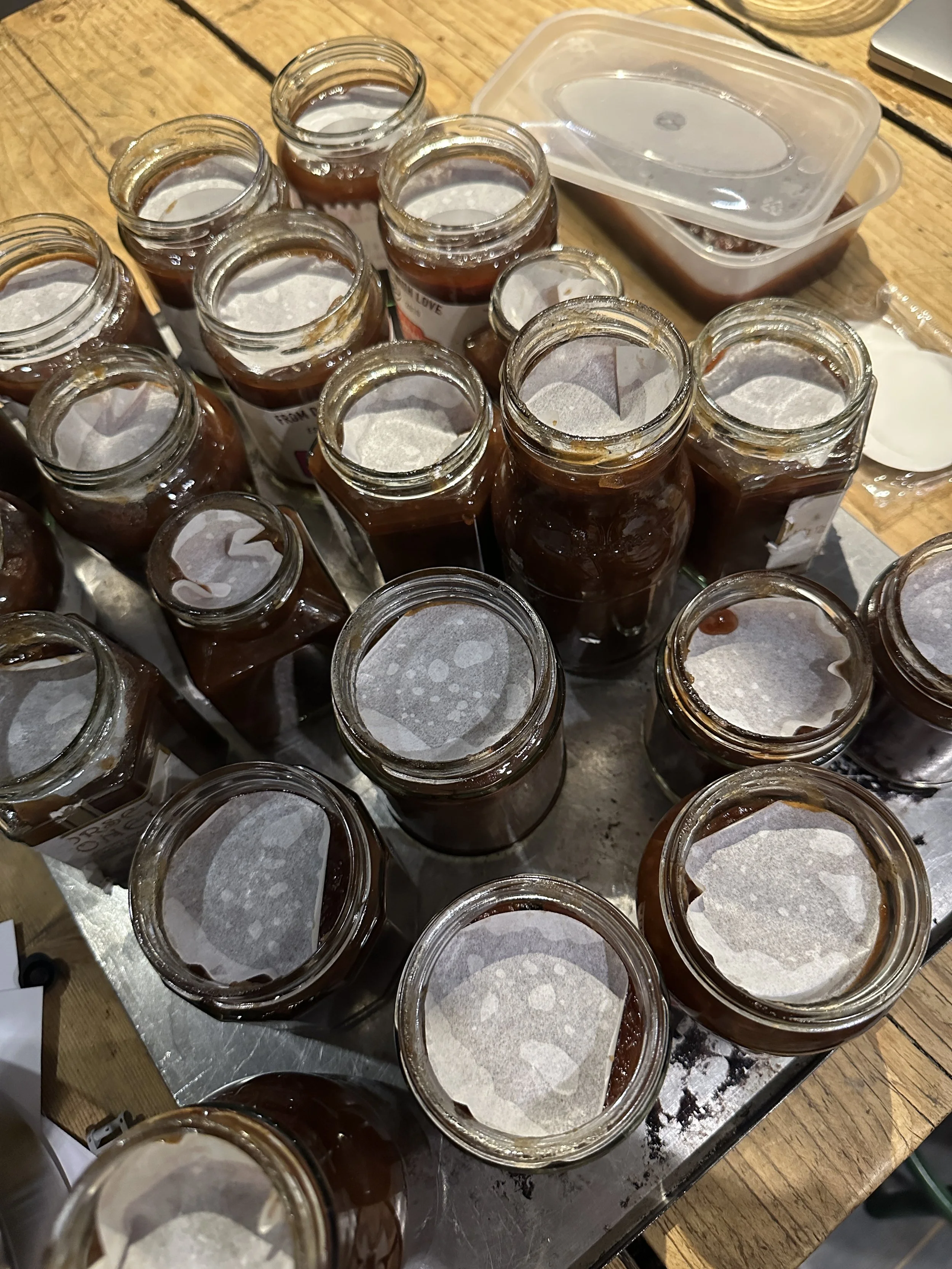
This year I made 30 jars. The most time-consuming part is the peeling and chopping—hours of it. Your hands smell of onions and vinegar for days afterward, but there's something meditative about the rhythm of it all.
What goes into our chutney:
Apples from our orchard
Onions from the village shop
Dates and raisins for sweetness and depth
Vinegar, brown sugar, and the spice mix that I guard like a state secret
Time—lots of it, bubbling away on the AGA while the kitchen windows steam up
The smell of chutney-making day is extraordinary. Vinegar-sharp at first, then sweetening as the sugar caramelises, finally mellowing into something that smells like comfort itself. By evening, the windowsills are lined with cooling jars, their lids popping one by one as they seal.
This chutney is our winter luxury—not something we serve guests, but something we enjoy ourselves with cheese and crackers by the fire. Lucy's recipe has seen us through years of autumn evenings. It's never failed, never needed improvement. Some things are simply right as they are.

The Blessing of Our Own Eggs
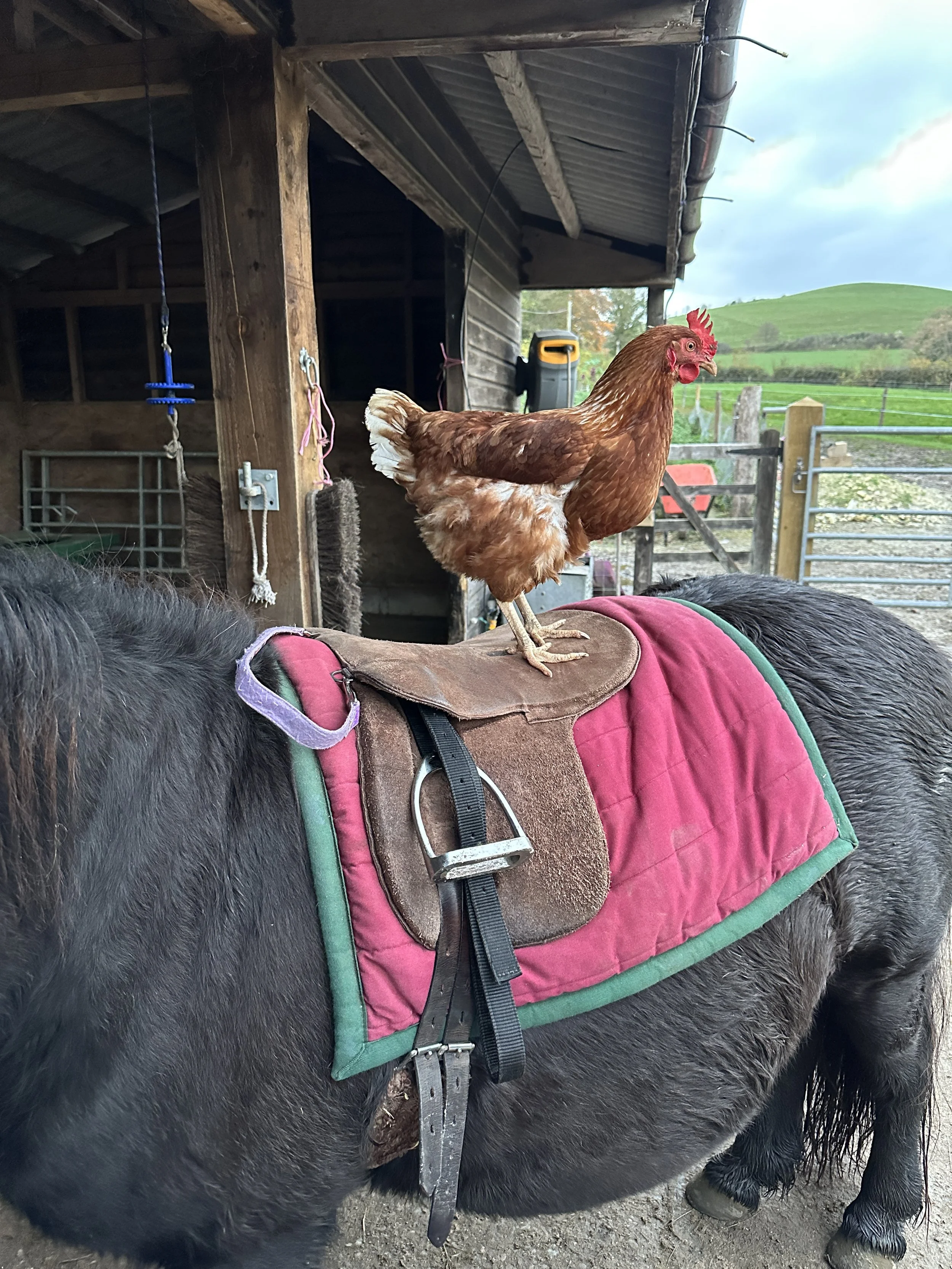
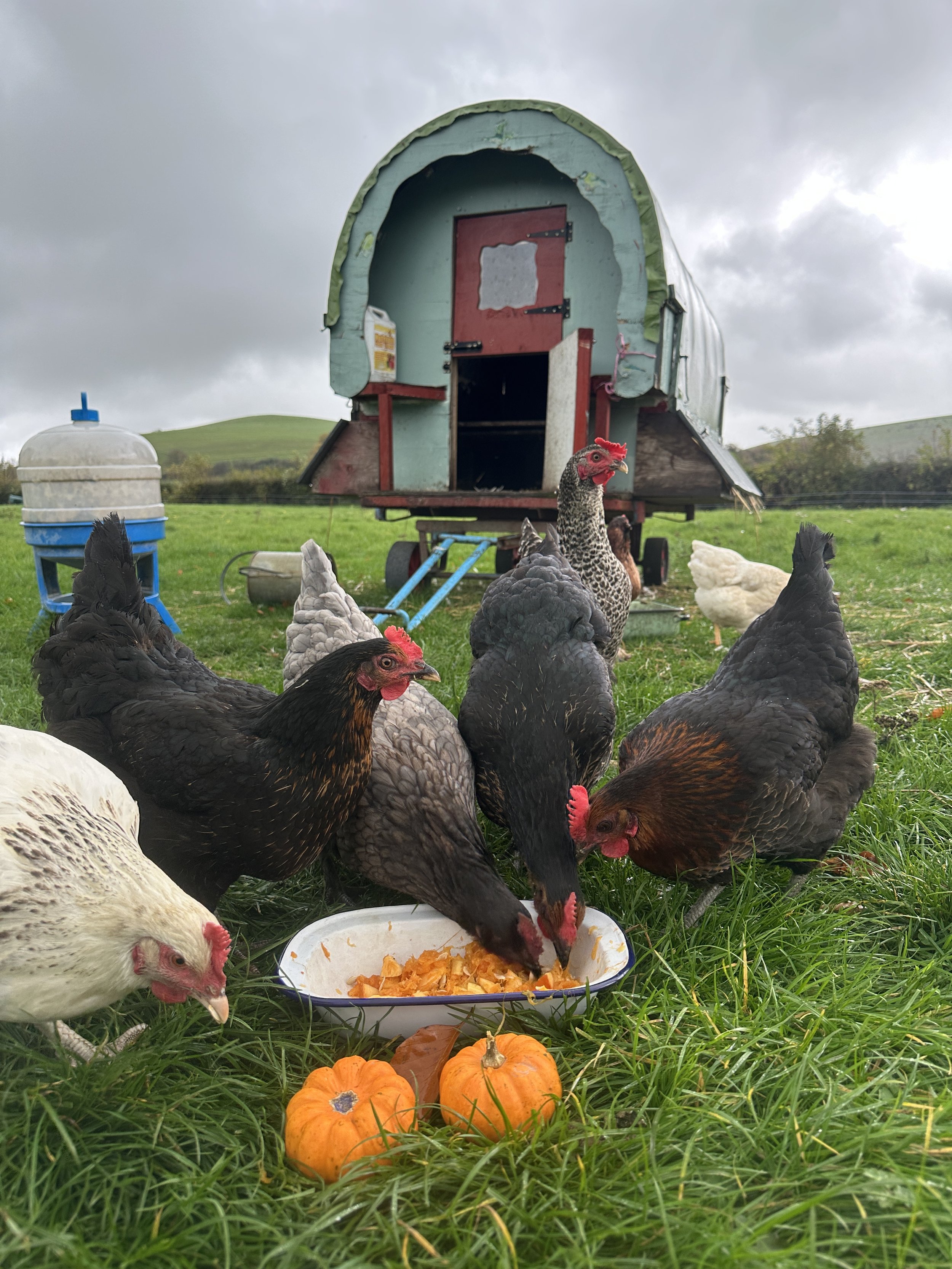
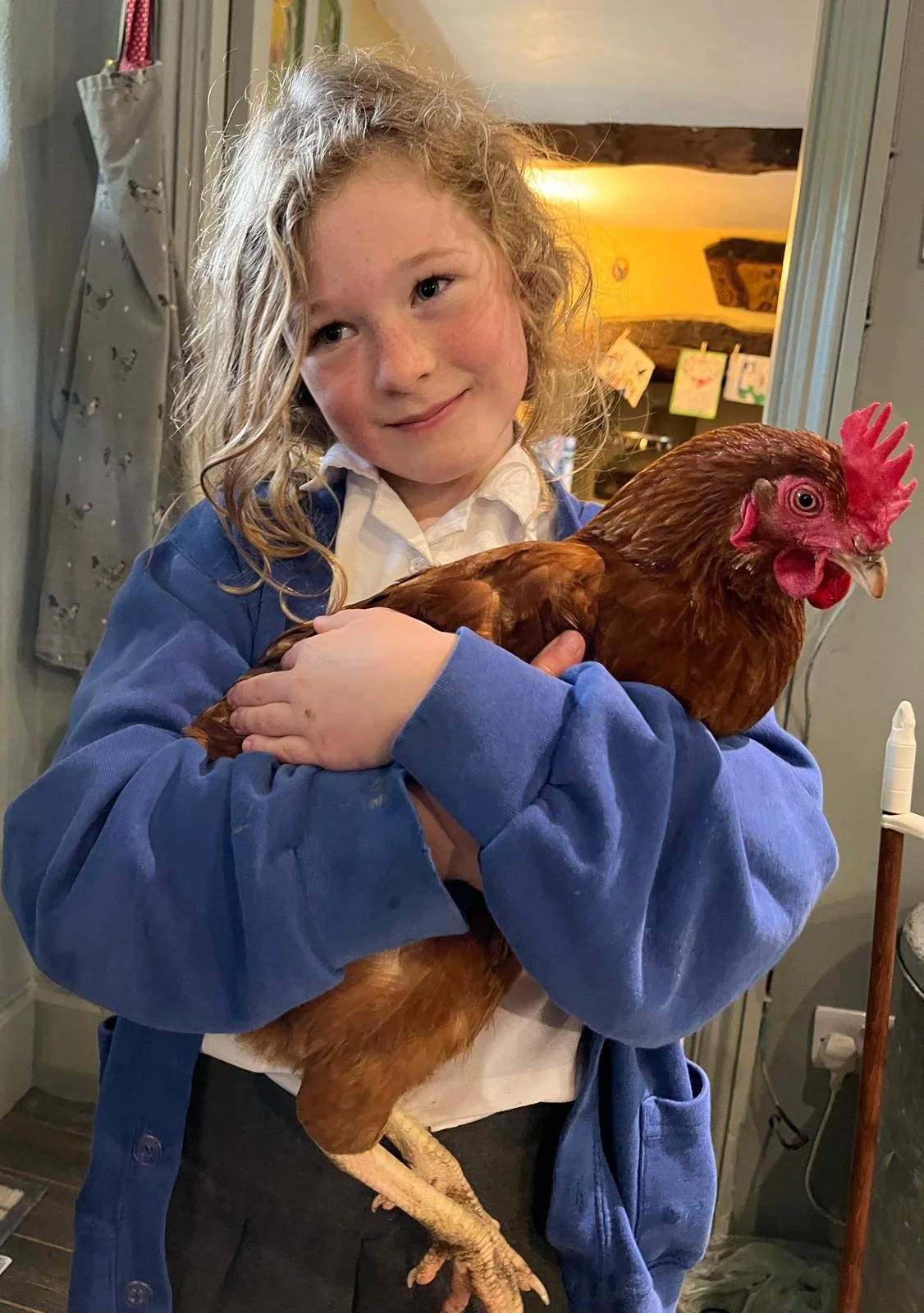
Chickalinda and the flock earn their keep every single day. We keep a variety of breeds—bantams, Black Rocks, Light Sussex, Marans to name a few—and they house in the stables next to the horses. Free-ranging across the fields, they live as chickens should.
The difference in fresh eggs is extraordinary. Thick, glossy whites and vivid orange yolks—genuinely orange, not pale yellow—from their natural diet of grass, insects, and whatever else takes their fancy.
What makes our eggs special:
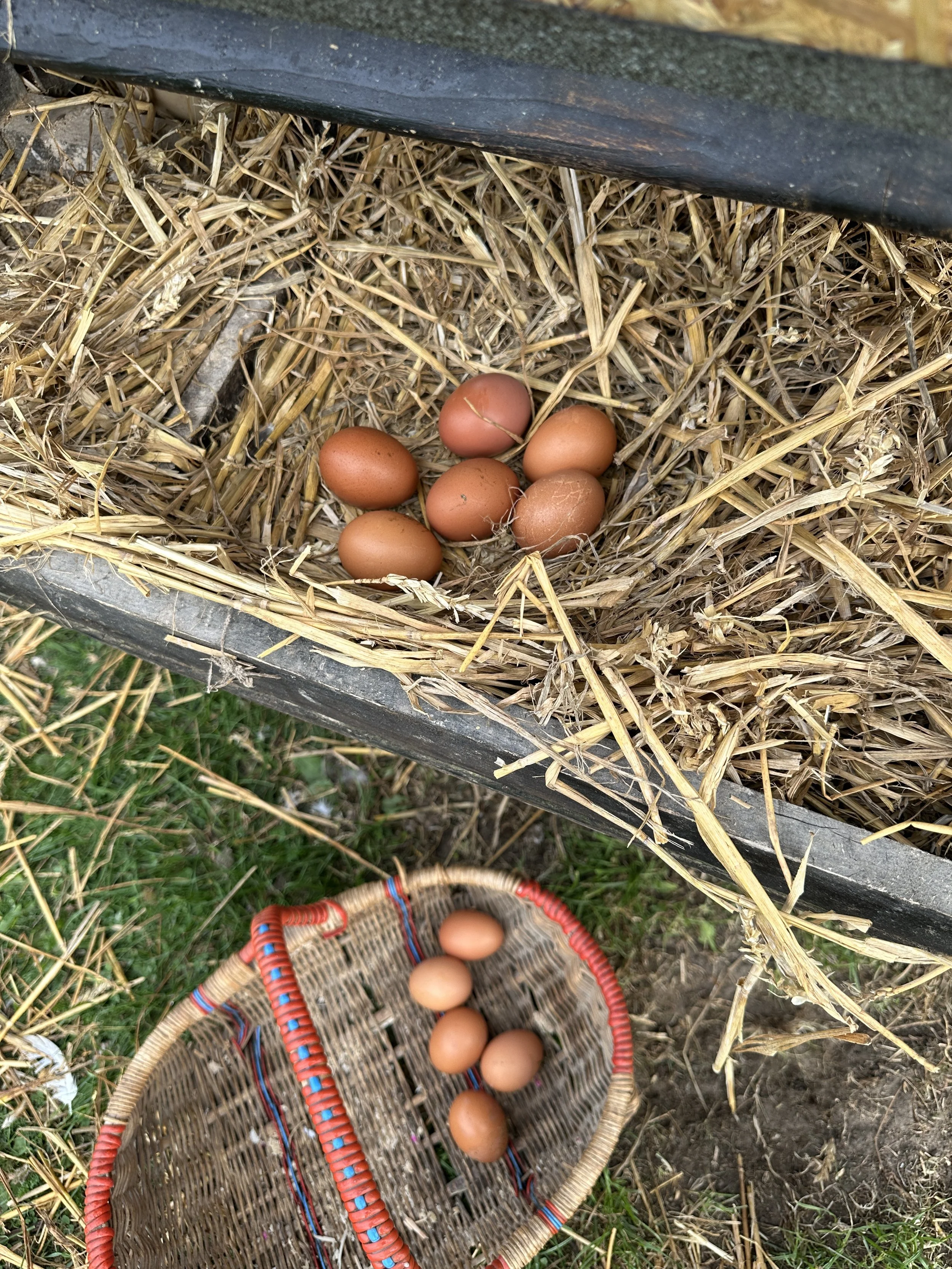
Collected daily, often still warm from the nest
Deep orange yolks from free-ranging in proper fields
Varied in size because chickens aren't machines
Often treated to double-yolkers—always a breakfast surprise
That proper egg flavour you only get from genuinely free-range birds
When you crack into an egg at our breakfast table, the yolk practically glows. That deep orange colour is what eggs look like when chickens live properly, ranging freely rather than confined to a barn. Guests often comment on it, slightly wonderingly, as though they've forgotten what real eggs should look like.
Seasonal Fruit Compote: Simple Morning Magic
Throughout the year, fruit compote appears on the breakfast table. In winter it's apple from our orchard—made fresh then frozen in batches to see us through until spring. As the seasons change, so does the fruit, but the principle stays the same: simple, honest, and always served with fresh local yoghurt.
We don't need sugar—good fruit cooked down gently speaks for itself. Spooned over yoghurt or simply eaten on its own, it brings sweetness to breakfast without any fuss.
Our apple compote might also find its way into a crumble or cake if we're doing Sunday lunch or an evening meal, made with our own eggs for extra richness. But mostly it's for breakfast, a simple daily luxury that connects you directly to the land and seasons.
From Our Kitchen to Your Table
Everything I've described—the juice, the compote, the eggs—appears at breakfast without fanfare. No lengthy explanations. Just good food, made here, served with the quiet satisfaction of knowing exactly where it came from.
When you pour apple juice at breakfast, you're tasting fruit from trees you can see through the window. When you crack into an egg, you might have seen that very hen roaming the fields the evening before. It's connection, simplicity, and exceptionally good eating all at once.
The autumn preserving frenzy—the sorting, washing, pressing, peeling, chopping, and bottling—it all comes down to these quiet morning moments. A glass of golden juice. A bowl of fruit compote with local yoghurt. An egg with a yolk so orange it looks almost unreal.
Winter Warmth Awaits
Here at The Old Forge, winter is when our autumn preserving really proves its worth. The breakfast table becomes even more inviting when frost patterns the windows and the AGA radiates warmth through the old house.
We're taking bookings now for winter and early spring stays. Come for the walking, the peace, the hot tub under winter stars. But perhaps most of all, come for the food. Real food, made by real people, in a place where slow rhythms and proper ingredients still matter.
Book your winter escape and taste the difference that homegrown makes. Visit our website or ring me to discuss dates. Woody the shepherd's hut has availability throughout January and February—complete with private hot tub and the option to book in for our home-cooked breakfast. Our B&B rooms offer the full experience with breakfast included each morning, while our cottage guests are welcome to book in for breakfast too.
Because sometimes, the best adventures start at the breakfast table, with orange-yolked eggs and juice pressed from our own small orchard, served in a place where food still tells you exactly where it came from.
— Sophie
