International Dark Sky Reserve
Stargazing in December
The magic of winter skies in the Cranborne Chase Dark Sky Reserve
December is one of the most enchanting months of the year for stargazing. With long, crisp nights and the Sun sitting low in the sky, the darkness falls early and lingers – perfect for spotting constellations, planets and even the occasional meteor streaking overhead.
🌌 A Dark Sky Reserve on Your Doorstep
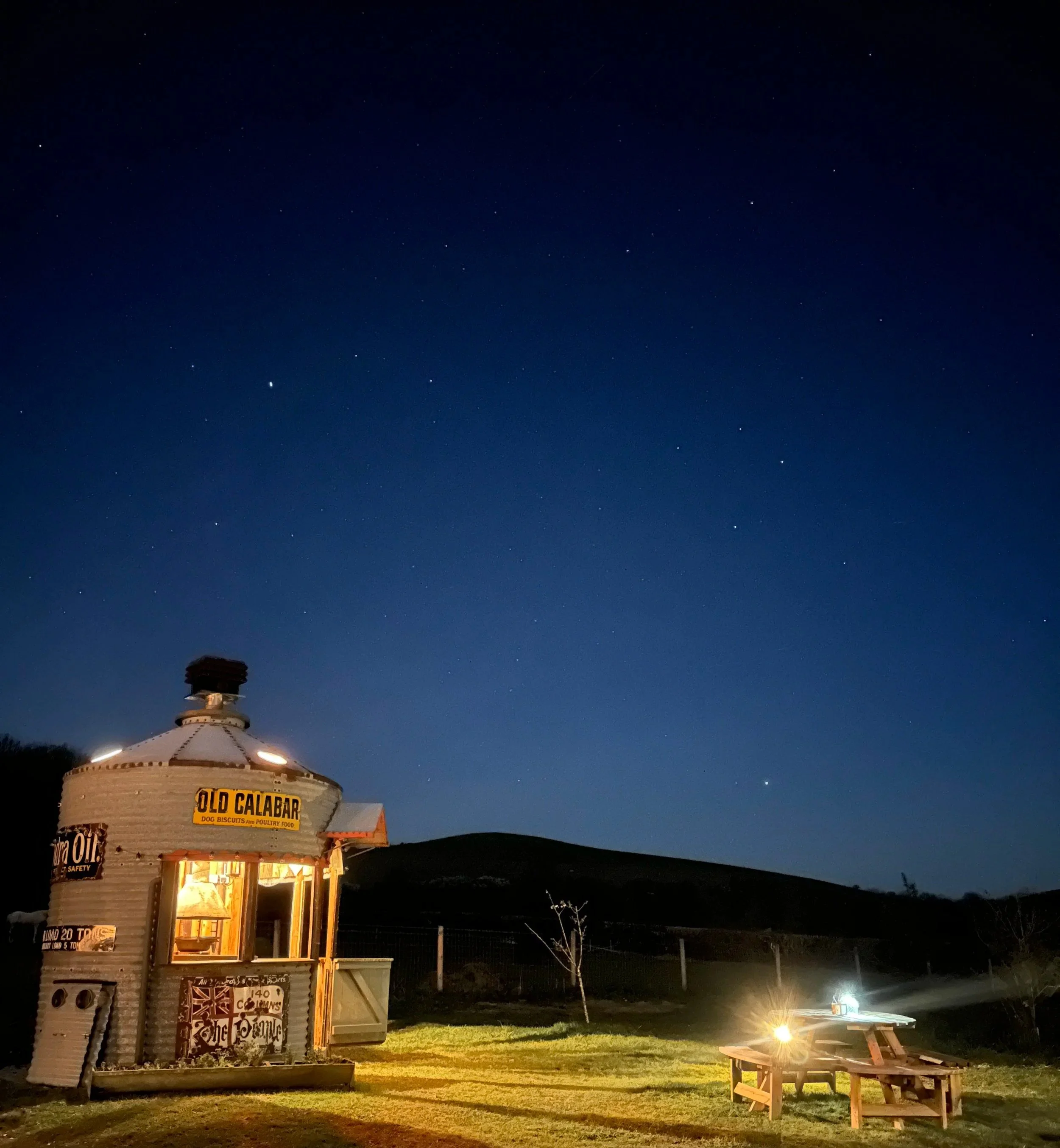
Cranborne Chase became the first National Landscape in the country to be designated in its entirety as an International Dark Sky Reserve (IDSR) back in 2019.
We’re incredibly fortunate to be right in the heart of it. Many of our guests arrive from towns or cities and are amazed by just how bright, clear and star-filled our night skies are.
Compton Abbas is proudly listed as one of the top 10 stargazing sites in the whole Cranborne Chase AONB – and the others are all within an easy drive. If you’d like to explore more, the Dark Sky Discovery Guide is a brilliant resource:
👉 http://www.chasingstars.org.uk/
Out here, on a clear winter’s night, you don’t need telescopes or equipment – just warm layers, a blanket, and a little time for your eyes to adjust.
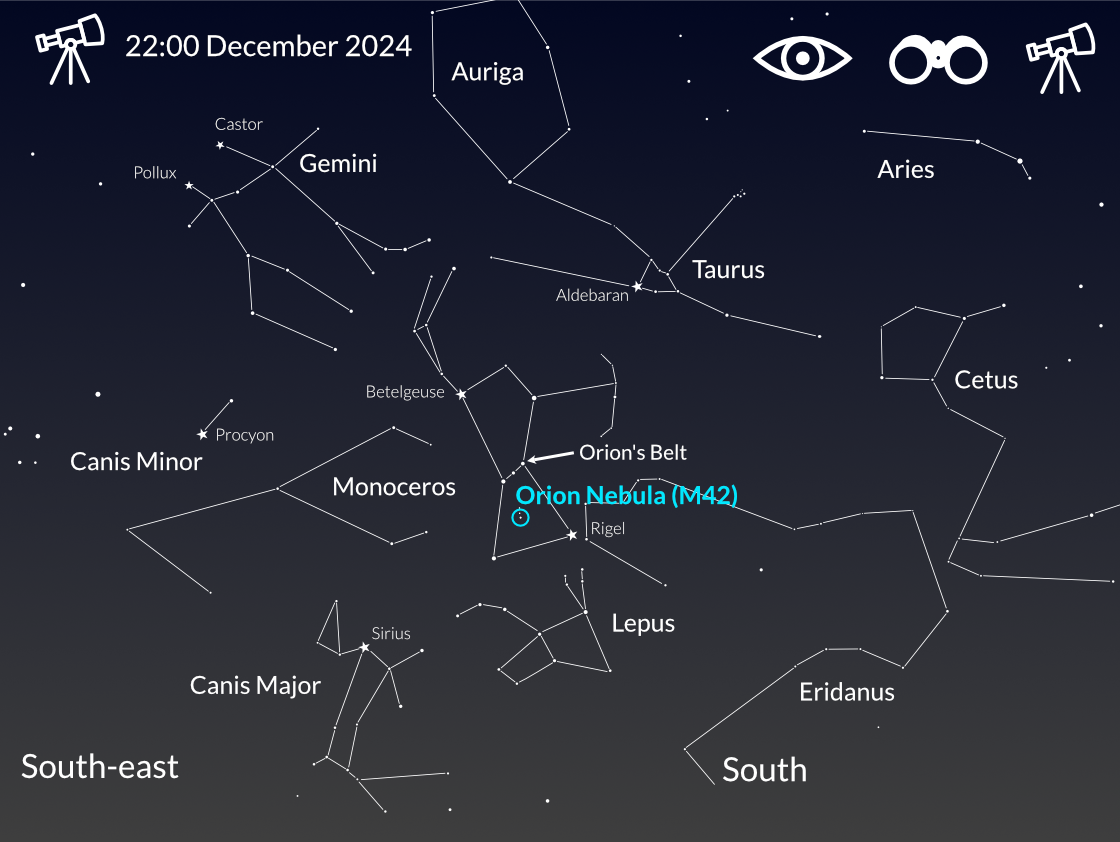
🌠 What to Look for in the December Night Sky
⭐ The Christmas Tree Cluster!
A festive favourite: around 600 sparkling stars shaped like a glowing Christmas tree.
Look halfway between Betelgeuse (the bright orange star in Orion) and Procyon.
⭐ Taurus: Pleiades & Hyades
These two bright star clusters shine beautifully on winter evenings.
Pleiades (“Seven Sisters”) look like a tiny scoop of glitter.
Hyades form a distinctive V-shape next to the eye of Taurus the Bull.
Both appear in the eastern sky after dark.
⭐ Jupiter & Saturn
Jupiter is the brightest “star” in the southern sky.
Saturn sits lower in the south-west early evening before setting.
Even binoculars can reveal Jupiter’s moons on a steady night.
⭐ The Andromeda Galaxy
Our nearest large galactic neighbour — visible as a faint, misty patch with the naked eye under very dark skies, and clearer through binoculars.
⭐ The Geminid Meteor Shower
Peaking 13–14 December, this is one of the most reliable meteor displays of the year, often producing up to 100 meteors per hour in perfect conditions.
A wonderful excuse to settle into a deckchair with a hot drink and watch the skies.
❄️ The Winter Solstice
Looking ahead, December also brings the winter solstice on 21 December, when the northern half of the Earth leans furthest away from the Sun.
This means:
the shortest day,
the longest night,
and the official start of astronomical winter.
For stargazers, it provides the most hours of darkness all year — a perfect time to head outside and look up.
🔭 Tips for Stargazing
Allow your eyes 10–20 minutes to adjust to the dark
Use a red torch if you need light — it protects your night vision
Try a phone app like SkySafari or Stellarium to help identify stars
Switch off outside lights for the best visibility